I want to start by saying this choice often feels confusing, and that reaction makes sense. Many people pause because both options sound helpful, yet the purpose behind each approach differs in clear ways. I see this question come up when relationships feel tense, distant, or stuck, and personal stress adds another layer of pressure.
From my experience discussing therapy options with people, the real concern usually sits beneath the surface. Some worry about choosing the wrong path and losing time. Others feel unsure because emotions feel mixed and hard to explain. That uncertainty does not mean failure. It signals awareness and care.
Let me explain this clearly and calmly so you can think with confidence. I will walk you through how couples counseling vs individual therapy works, where each option fits best, and how both can support healthy change without forcing rushed decisions.
Why Choosing the Right Type of Therapy Matters
The reason this decision matters relates to goals and timing. Different struggles need different forms of support. When the therapy type matches the problem, progress often feels steadier and more meaningful instead of frustrating or stalled.
Choosing a path that does not fit your needs can slow improvement and create doubt about therapy itself. That outcome discourages people who already feel vulnerable. I want to reassure you that feeling unsure at this stage remains common and fixable.
What Is Couples Counseling?
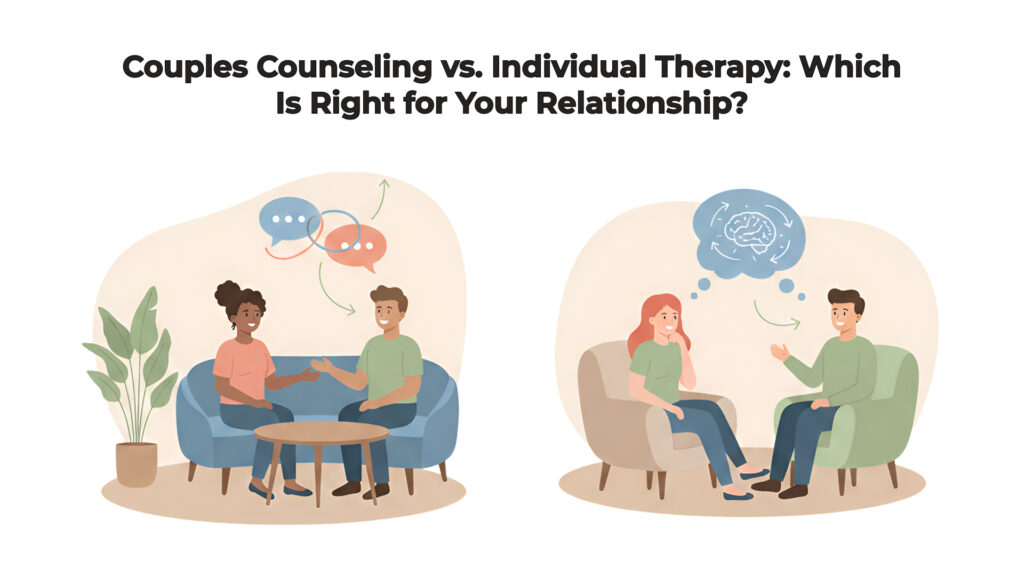
This approach centers on the relationship rather than one person. Couples counseling focuses on patterns between partners, including how conversations start, escalate, or shut down during stress. The work stays shared and visible.
A therapist listens to both sides and stays neutral. The goal involves improving connection, reducing conflict cycles, and helping each partner feel heard. Relationship therapy works best when both people want to improve how they interact and respond.
What Is Individual Therapy?
Individual therapy places attention on one person’s inner experience. This space allows private exploration of thoughts, emotions, and behaviors without another partner present. The focus stays personal and reflective.
People often use this option to address anxiety, trauma, emotional control, or self-esteem. Individual therapy benefits relationships indirectly because improved self-awareness often changes how someone shows up with others.
Key Differences Between Couples Counseling and Individual Therapy
Understanding the contrast helps clarify expectations. These approaches serve different roles even though both aim to support emotional health. The setting, goals, and boundaries vary in important ways.
Focus and Goals
Couples counseling centers on shared patterns and joint goals. Progress depends on how both partners engage and change together. The relationship becomes the client rather than either individual alone.
Individual therapy focuses on insight and personal stability. Goals relate to emotional balance, self-understanding, and behavior change that supports healthier interactions with others.
Session Structure and Dynamics
Sessions in couples counseling include both partners in the room. Conversations happen in real time, which allows the therapist to observe and guide communication safely.
Individual therapy happens one-on-one. This structure offers emotional safety for deeper reflection without needing to manage another person’s reactions during the session.
Confidentiality and Boundaries
In couples counseling, the space remains shared. Information discussed belongs to the relationship, and the therapist balances fairness with clarity.
Individual therapy offers private confidentiality. The therapist holds responsibility to one person, allowing deeper personal exploration without shared disclosure expectations.
When Couples Counseling May Be the Better Choice
Certain situations call for joint support. If communication breaks down often, couples counseling provides tools to slow conversations and reduce misunderstandings.
Ongoing conflict, trust concerns, or repeated arguments benefit from relationship therapy. This approach works well when both partners want to improve dynamics and rebuild connection together.
When Individual Therapy May Be More Helpful
Some challenges require personal work first. Trauma, anxiety, or depression can limit emotional capacity during joint sessions.
Individual therapy supports self-regulation and clarity before shared work begins. This step prevents premature couples counseling that may overwhelm one or both partners.
Can Couples Counseling and Individual Therapy Work Together?
Yes, both approaches can support growth at the same time. Some people benefit from parallel therapy with clear boundaries between providers.
This combination allows personal healing alongside relationship improvement. Clear communication between therapists ensures ethical care and focused progress.
What If Partners Want Different Types of Therapy?
This situation happens often and deserves respect. Readiness levels vary, and forcing agreement rarely helps.
A therapist can guide conversations about timing and options. Sometimes starting separately leads to stronger joint work later.
Questions to Ask Before Choosing Therapy
Before deciding, pause and reflect. Ask what challenges feel most urgent right now.
Consider whether emotional safety exists for shared sessions. Think about willingness from both partners to participate honestly.
Frequently Asked Questions
Is couples counseling better than individual therapy?
Couples counseling helps relationship issues, while individual therapy supports personal concerns. The better choice depends on goals, emotional readiness, and the type of challenges present.
Can one person attend couples counseling alone?
Couples counseling works best with both partners present. One person can start with individual therapy if the other partner feels unsure or unwilling initially.
Does individual therapy help relationships?
Yes, individual therapy can improve relationships by increasing self-awareness, emotional control, and communication skills that transfer into shared interactions.
How long should therapy last?
Therapy length varies based on goals and progress. Some people see changes in months, while others continue longer for deeper support.
Should we try individual therapy before couples counseling?
In some cases, starting individually helps build stability first. A therapist can help decide the safest and most effective order.
There’s No “Wrong” Choice—Only the Right Next Step
I want to end with reassurance. Therapy works as a process, not a label. Choosing couples counseling vs individual therapy does not lock you into one path forever.
What matters most involves clarity, safety, and willingness to grow. The right next step often brings insight that guides everything after.